Paver Cleaning & Pressure Washing in Pinellas County
Paver Ink pressure washes pavers, concrete and hardscape throughout Treasure Island and nearby Pinellas County communities. Cleaning is a service on its own, and it is also the first step of every sealing job we do.
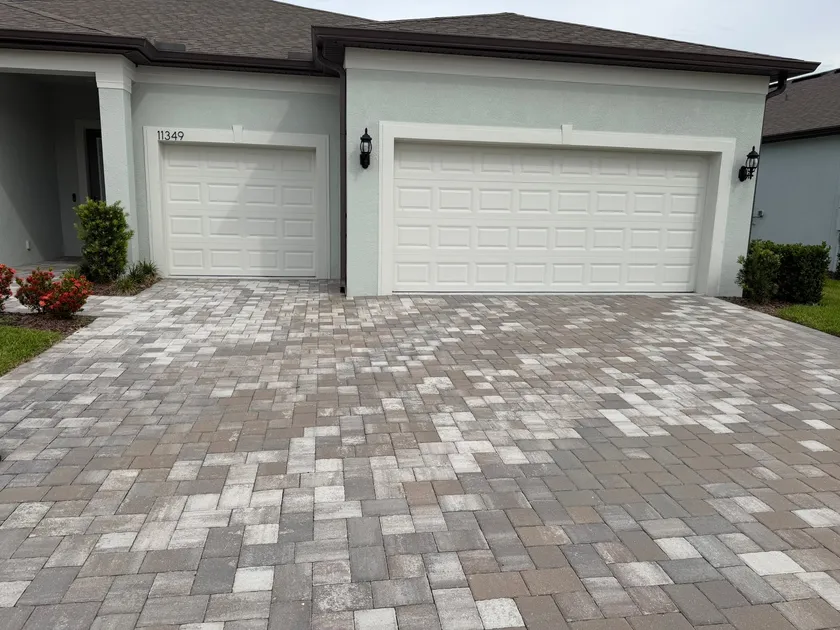
About pressure washing
Cleaning is a service, and it is also step one
Plenty of jobs are a clean and nothing more. The pavers were sealed recently, or a house is going on the market, or the surface simply has a season of grime on it.
It is also the first step of every sealing job we do, because sealer is transparent and permanent. Anything left on the paver stays visible under the finish forever.
What comes off, and what needs treating
General algae, mildew and the gray film come off with a surface clean. These do not:
- Irrigation rust needs a rust-specific treatment, not pressure
- Oil and transmission drips need a degreaser with dwell time
- Tannin from oak and other leaf litter needs its own product again
- Efflorescence is mineral salt, treated rather than blasted
Pressure is not the goal
The instinct is that more pressure means cleaner. On pavers it mostly means damage: a narrow jet cuts visible lines into the paver face and strips the joint sand entirely.
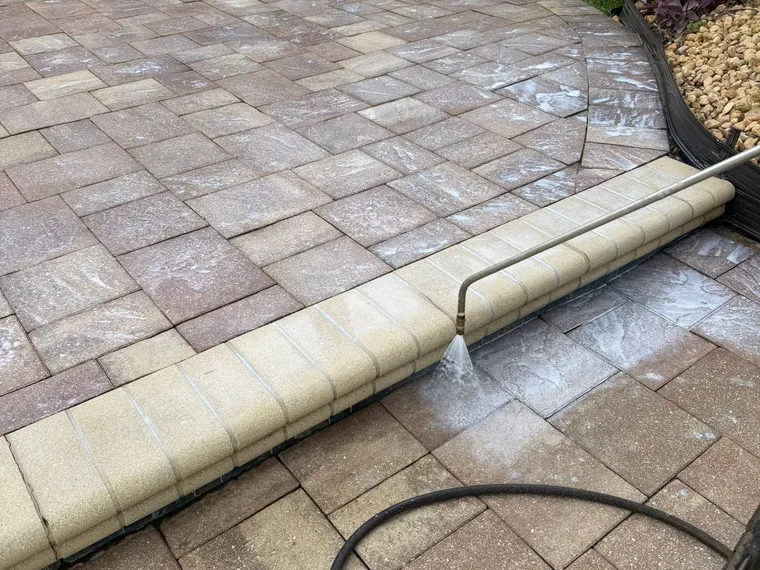
We run a surface cleaner across the field, which spreads the force over a wide plate, then hand detail the edges and stains where it is actually needed. Older brick and softer pavers get less pressure again.
Soft washing for what pressure would ruin
Some surfaces should never see high pressure: screen enclosures, painted surfaces, and older stucco among them. Those get a low-pressure approach with the cleaning done chemically rather than mechanically.
Four steps, no surprises
-
Walk the job
We measure the field, count the joints and tell you what the surface actually needs. If sealing is the wrong call, we say so.
-
Clean & sand
Surface clean, then hand detail the edges and stains. Polymeric sand gets swept and set into every joint.
-
Seal
Two coats, wet-look or matte, applied once the pavers read dry all the way through. Damp pavers are how sealer goes cloudy.
-
Walk it again
You look at it with us before we load the trailer. Anything off gets fixed that day, not on a callback.
Recent work
Pressure washing questions
Is pressure washing enough on its own, or do I need sealing too?
Cleaning alone is a perfectly reasonable choice. It just is not protection. A cleaned unsealed paver starts collecting dirt again immediately and is back where it started within a season or two. Sealing is what makes the clean last. We will tell you which you actually need.
Can pressure washing damage my pavers?
At the wrong pressure with the wrong tip, absolutely. A narrow jet will cut lines into a paver face and blast the joint sand out entirely. We use surface cleaners that spread the force out, and we drop the pressure on older or softer material.
Do you handle rust and oil stains?
Yes, and both need their own treatment rather than more pressure. Irrigation rust needs a rust-specific product; oil needs a degreaser with dwell time. Pressure alone cleans around those stains and makes them stand out more.
Will I need new joint sand after a wash?
Often, yes. Cleaning removes whatever loose material was in the joints, and on a surface that has not been maintained there was not much holding it together anyway. We would rather refill it properly than leave you with open joints.