Paver Sealing in Treasure Island & Pinellas County
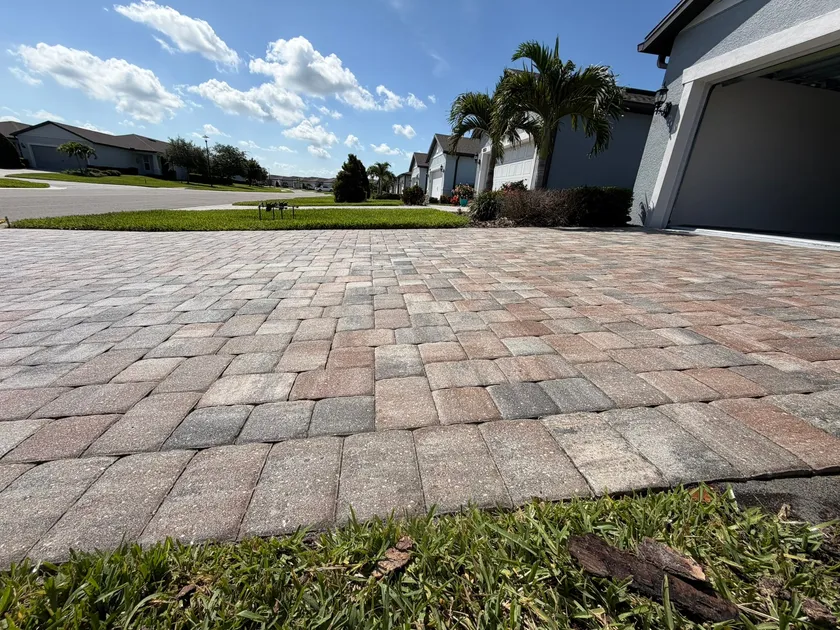
Paver Ink seals paver driveways, pool decks, patios and walkways across Treasure Island and the surrounding Pinellas County beach communities. Every job is cleaned and re-sanded first, because sealer applied over dirt and empty joints locks the problem in instead of solving it.
About paver sealing
What goes wrong with unsealed pavers
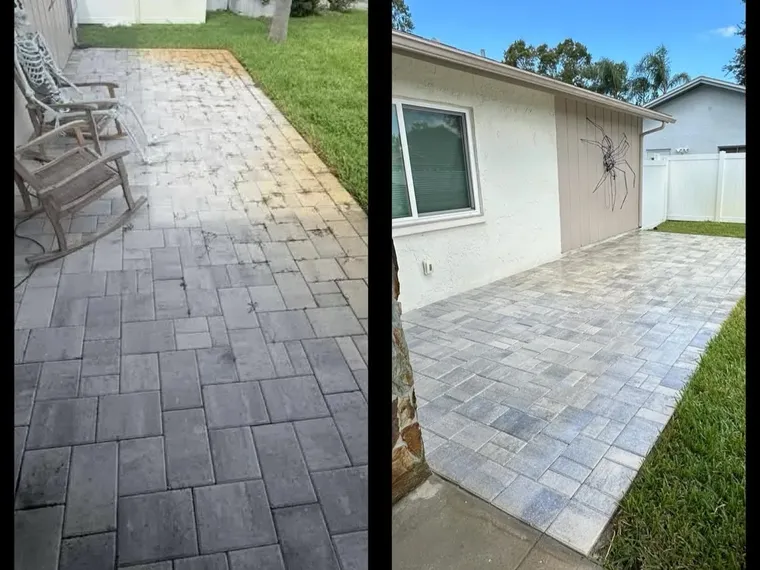
A paver is porous. Left open, it takes on everything that lands on it: rain, salt, oil, sunscreen, fertilizer, tannin from whatever is growing overhead. At the same time UV works on the pigment from above.
The joints go first, though. Loose sand washes out with every storm, the field loosens, and once pavers can move against each other the edges start chipping. Weeds and ants find the gaps within a season.
What sealing actually changes
A properly sealed surface behaves differently in four ways:
- Color holds instead of bleaching out under UV
- Polymeric sand sets firm, so the field locks together
- Dirt sits on the surface rather than soaking into the paver
- Weeds and ants lose the open joint they need
Wet-look or matte
Wet-look deepens the color and adds a slight sheen. It makes a driveway look like it does just after rain. Matte protects identically but leaves the pavers reading natural and dry.
The one place this is not purely preference is around a pool, where we steer people firmly toward matte or low-sheen. A glossy film under bare wet feet is a real hazard, not a style choice.
Surfaces we seal
- Driveways and aprons
- Pool decks and surrounds
- Patios and outdoor living areas
- Walkways, paths and entryways
- Travertine and natural stone
Four steps, no surprises
-
Walk the job
We measure the field, count the joints and tell you what the surface actually needs. If sealing is the wrong call, we say so.
-
Clean & sand
Surface clean, then hand detail the edges and stains. Polymeric sand gets swept and set into every joint.
-
Seal
Two coats, wet-look or matte, applied once the pavers read dry all the way through. Damp pavers are how sealer goes cloudy.
-
Walk it again
You look at it with us before we load the trailer. Anything off gets fixed that day, not on a callback.
Recent work
Paver sealing questions
Should I pick wet-look or matte?
Wet-look deepens the color and gives a slight sheen, which suits driveways and entryways. Matte protects identically but keeps the pavers looking natural and dry. On pool decks we steer people toward matte or a low-sheen finish for grip. It is genuinely a preference call everywhere else.
How long before I can walk and park on it?
Foot traffic is usually fine within a few hours. Vehicles need longer. Plan on keeping the car off overnight at minimum. Heat and humidity both move that number, so we give you the actual window on the day rather than a generic figure.
Will sealing stop weeds coming through the joints?
Largely, yes, because the polymeric sand hardens and closes the gap weeds germinate in. What sealing cannot stop is seed landing on top and rooting in surface debris. Far less of it, far easier to pull, but not literally zero.
My pavers were sealed before and it went cloudy. What happened?
Usually one of three things: sealer applied over damp pavers, applied too thick, or a solvent-based product put over an incompatible previous coat. Moisture trapped underneath is the most common. It can generally be stripped and redone, but we would want to look at it first.
Do you seal travertine and natural stone?
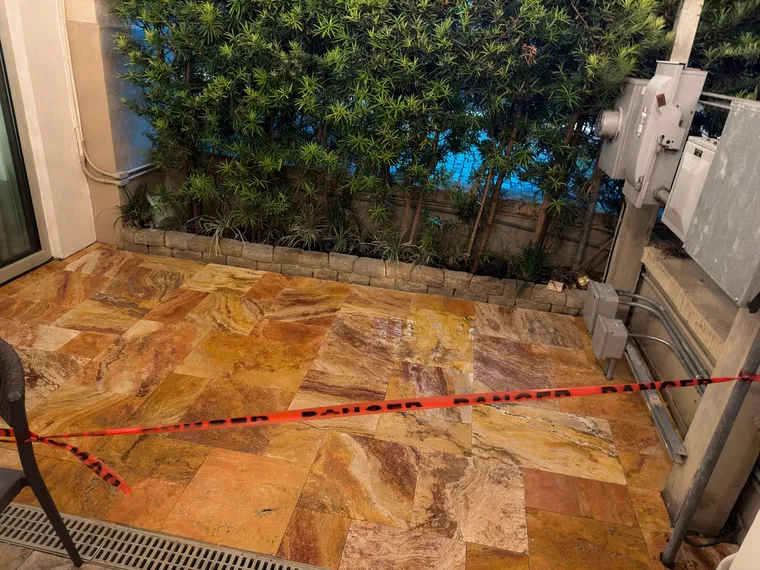
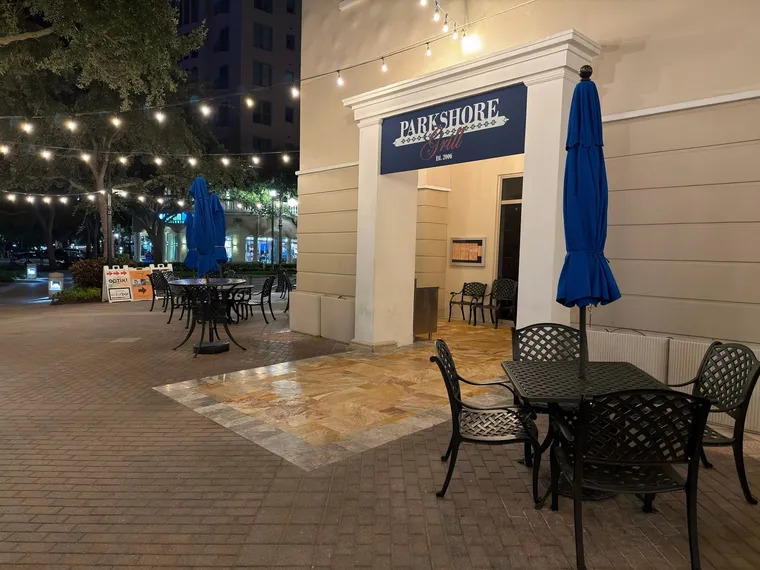
Yes. Travertine is softer and more porous than concrete paver and needs a different cleaning approach and a different sealer. We do this on both residential pool decks and commercial properties.